Resole vs buy new: the real maths on a pair of €200 trail-running shoes
Is it worth paying €45-70 for a resole or buying new shoes? We run the real numbers and tell you when each option makes more sense.
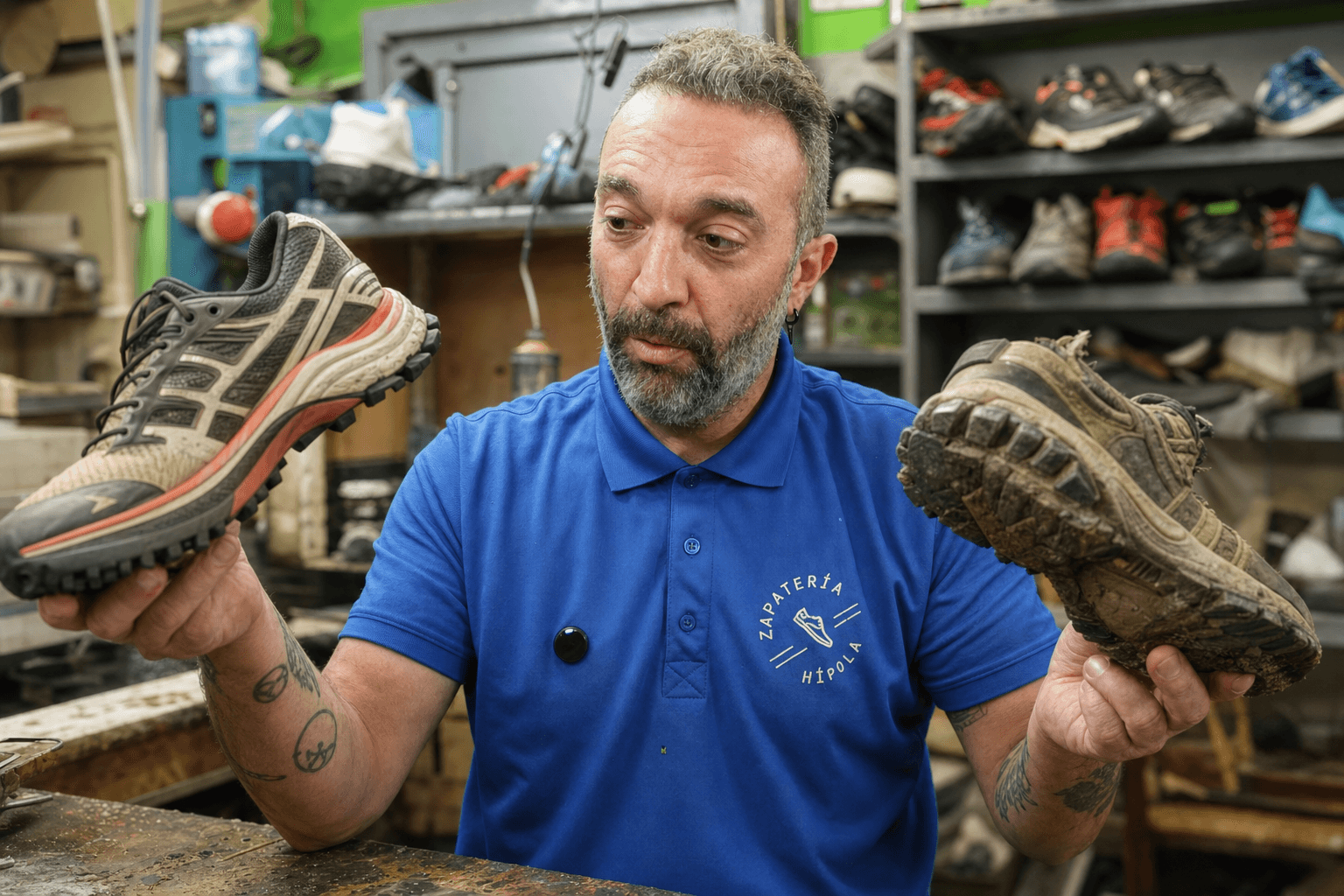
You arrive at the workshop with your Hoka Speedgoat or your Salomon Speedcross after 600 km. The outsole no longer grips like it used to and the outsole-to-midsole bond is starting to talk. The inevitable question: do I spend €60 resoling them or grab a new pair for €180?
Here's the real maths, no holds barred, based on what we see every week in the workshop.
The baseline scenario
A new modern trail-running shoe: €180 (mid-range Salomon/Hoka/La Sportiva).
Expected lifespan of the model: 600-1000 km depending on the brand, the runner's weight and the terrain.
Cost per km when new: between €0.18 and €0.30/km.
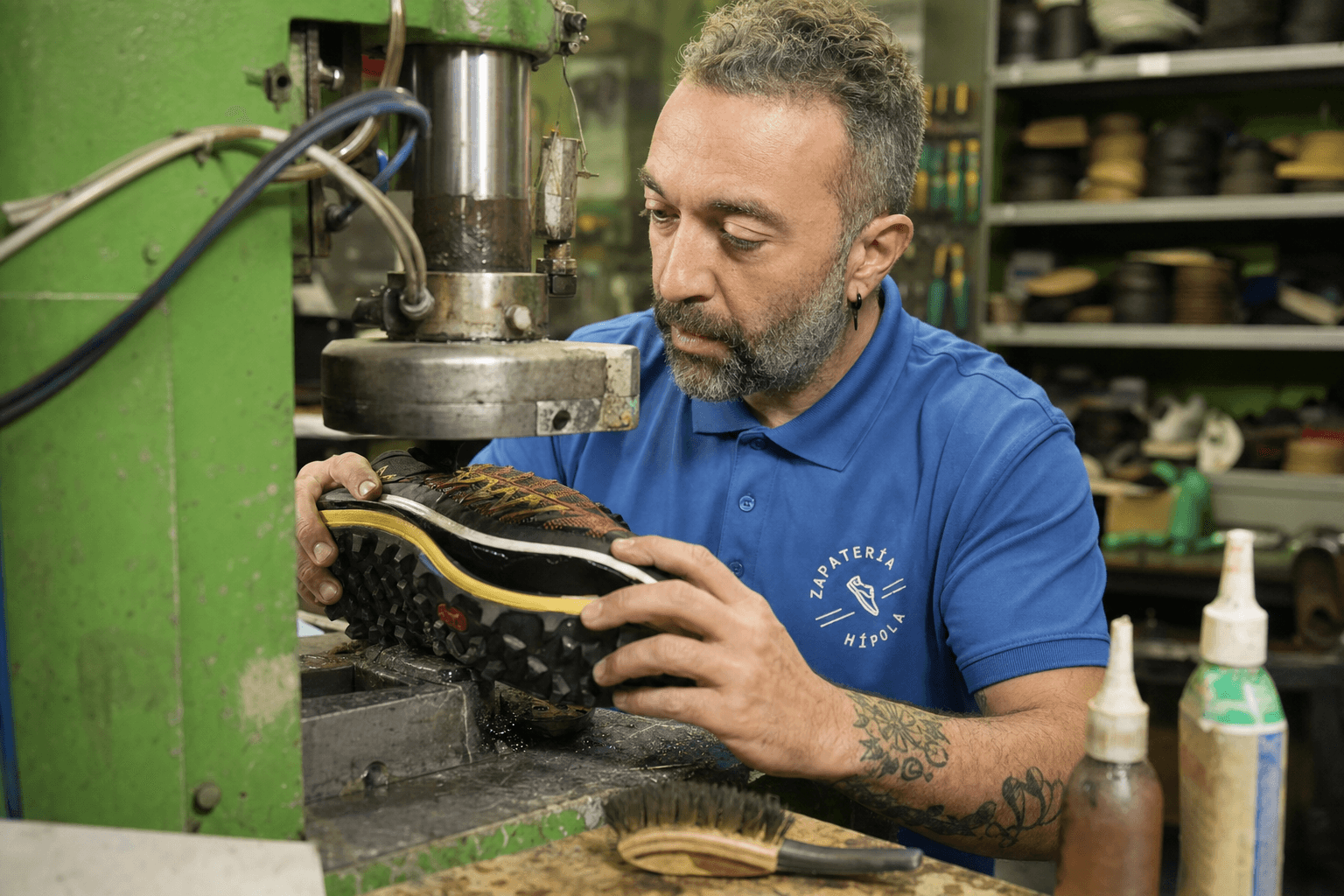
Option A · Resole with a full Pegafort job
Pegafort resole plus side stitching if needed: €45-70.
Expected lifespan after the resole: 300-500 km more (assuming the midsole is still sound).
Cost per km: between €0.15 and €0.23/km — cheaper than a new shoe.
The critical factor is the midsole. If the foam is compressed or dead, the resole isn't worth it: you're throwing away €60. That's why, before accepting a resole at the workshop, we assess the state of the midsole and tell you honestly whether it's worth it.
Option B · A new shoe of the same model
€180 for 600-1000 km is €0.18-0.30/km.
Upsides: 100% cushioning, original drop, optimal outsole tread.
Downsides: €180 now, and the same problem in 2-3 years once you reach 1500-2000 km in total.
Option C · A new mid-range shoe (Decathlon Evadict / Kalenji)
€80-110 for 400-700 km is €0.15-0.28/km.
Cost per km is similar to a resole, but you don't get back the shoe you already know and that your foot is used to.
For casual runners (1-2 outings a week) it's a good option. For serious training, resoling the shoe you already know still wins.
When to DO resole
✅ The shoe has fewer than 800 km in total.
✅ The midsole is springy when pinched (not flat, not broken).
✅ The upper (forefoot, laces) is sound. If the separation is only outsole-to-midsole, perfect.
✅ You get on well with that particular shoe — the comfort and fit are yours. Switching models can cost you two months of blisters.
When NOT to resole
❌ More than 1200 km in total. Even if we resole, the other parts (foam, upper mesh) are going to fail soon.
❌ A midsole that's visibly compressed or cracked on the inside.
❌ A discontinued model where you'll struggle to replace the insole or accessories.
❌ If you want to change drop, last shape or terrain type: take the chance and buy the new model.
The sustainability factor
Beyond the numbers, there's another sum: every new pair is around 1.5 kg of synthetic materials in production plus transport. Resoling reuses 70% of what you already have and only replaces the rubber and the adhesive.
We're not going to push the full-on eco lecture on you. But if the financial maths comes out even, sustainability tips the balance towards the resole.
How we decide it at the workshop
When your shoe reaches us, here's what we do:
1. A photo over WhatsApp plus approximate total km plus usual terrain.
2. A physical diagnosis once it's in the workshop: we press the midsole, check the bonding points, inspect the stitching.
3. If resoling saves you money in the long run, we say so.
4. If the shoe is already at the end of its life and resoling means throwing away €60, we say that too. We'd rather lose the job than mislead you and lose a customer.
5. If you are not in Madrid, the pair travels: here is how to send footwear in for repair from outside Madrid without leaving home.