How to start hiking: a complete guide for beginners
How to start hiking from scratch: what to wear, how to choose your first boots and the essential kit, with recommendations from Decathlon.
You want to head into the hills for the first time and you don't know where to begin. Sounds familiar, right? Hiking is one of the most accessible sports there is: you don't need to be an athlete or spend a fortune. But there are four or five things that, if you get them wrong, will ruin the experience on day one.
In this guide we explain exactly what you need, in what order to buy it and how to avoid the most common mistakes. No jargon, no sales fluff.
At Hípola we've been repairing the footwear of Madrid's hikers since 1986. More than 40 years watching which boots hold up and which don't. That perspective, the workshop's perspective, is what we're going to share here, especially when we get to footwear, which is our trade.
Before you set off: choose your first route wisely
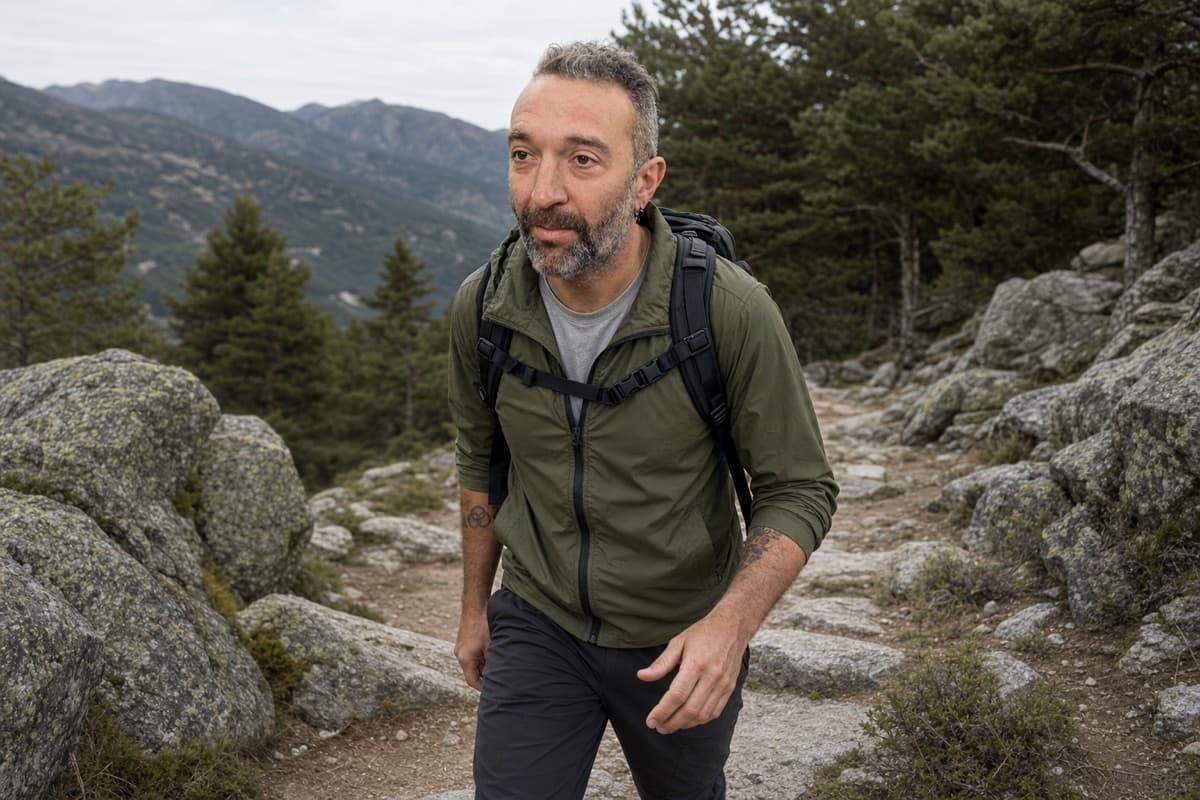
The starting point isn't buying gear: it's choosing a route at your level. The number one beginner mistake is setting off too hard and ending up wrecked halfway through.
For your first outing, look for:
• A route of under 10 km with less than 300 m of ascent.
• Well-waymarked trails. In Spain, the GR (long-distance), PR (short-distance) and SL (local) paths.
• Apps to plan and avoid getting lost: Wikiloc, AllTrails or Komoot.
• The weather forecast from AEMET before you set off. Always.
Two safety rules that cost nothing: tell someone where you're going and roughly when you expect to be back, and set off early so you don't run out of daylight. If it's your first time, pick something you can comfortably finish. The mountain isn't going anywhere.
Hiking clothing: the 3-layer system
All mountain clothing is built around one simple idea: three layers you add and remove depending on the cold, the wind and the effort. We'll explain it as if we were walking along together.
Layer 1 — The base: keeps your skin dry
It sits against the skin and has a single job: to wick sweat outwards so you don't get cold. The material is technical polyester or, better still, merino wool.
And the golden rule: never cotton. Cotton soaks up sweat, stays damp and chills you. It's the hiker's worst enemy. In summer, short sleeves; in winter, long sleeves.
To get started a basic one will do, such as the Quechua MH100 technical T-shirt (€4.99). If you want to invest a little more and feel the difference, the Forclaz MT500 merino wool T-shirt regulates temperature and smells less on longer outings.
Layer 2 — The insulation: keeps you warm
A fleece or a light down jacket that traps your body heat. It still needs to be breathable: sweat has to be able to escape. The trick is that you take it off when you push the pace and put it back on at a stop or when you reach the summit.
A Quechua MH100 fleece (€8.99) does the job nicely to start with.
Layer 3 — The protection: blocks wind and rain
The outer layer. It protects you from wind, rain and snow, and must be waterproof and breathable at the same time. For basic hiking, a packable rain jacket that fits in your backpack is plenty. For long routes or winter, look for a jacket with a membrane and a hydrostatic head above 10,000 mm.
A good starter option: the Quechua NH500 waterproof jacket (€34.99), also available in a women's version (€38.99).
Three layers and you're set. You don't need any more for 90% of the routes you'll do as a beginner. The key isn't having lots of kit, it's being able to take layers off and put them on as you need to.
A note on trousers: go for trekking trousers — light, breathable and with a bit of stretch. No jeans: they're heavy, they don't breathe and once wet they're a punishment. The Quechua NH100 trousers (€13.99) are a classic starter choice.
Hiking footwear: the most important decision
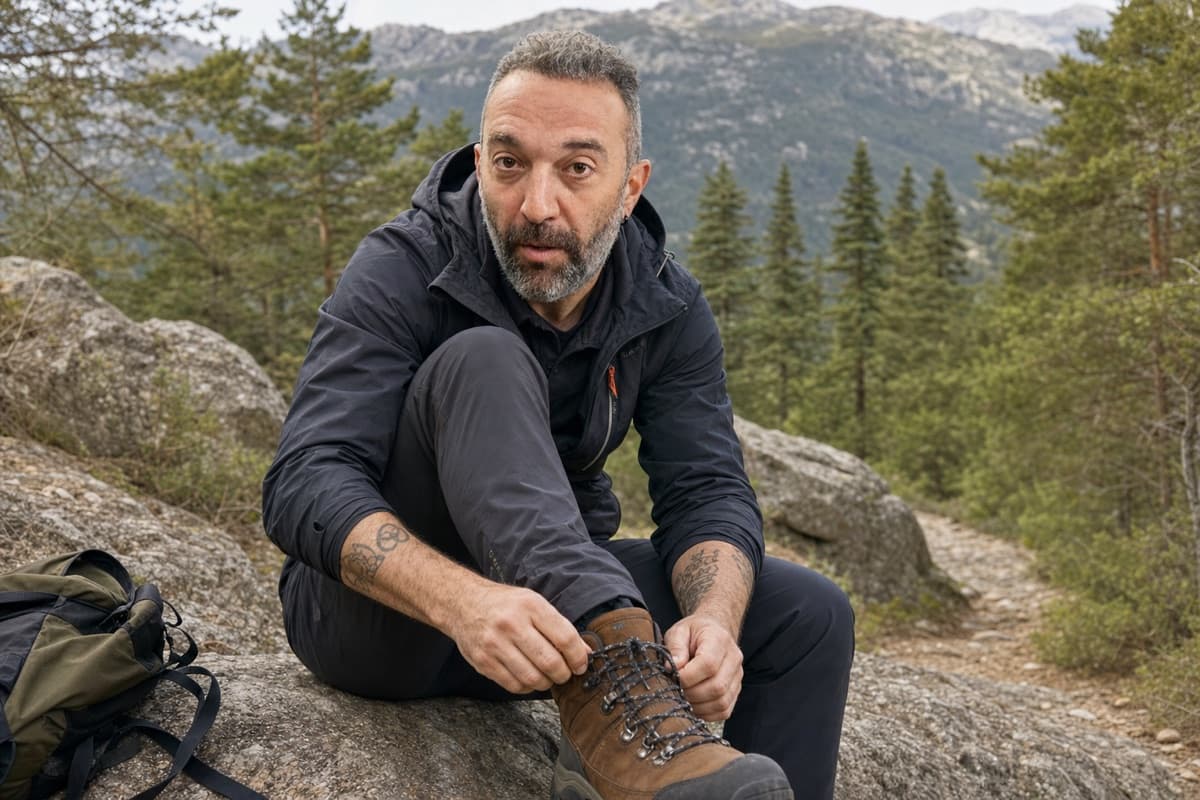
This is where we have the most authority. In the workshop we've spent 40 years watching destroyed boots, blistered feet and frustrated hikers come through the door because they bought the wrong footwear. Here's what you need to know before you buy.
High boots or low trail shoes?
Both options work to get started. The difference comes down to how much support and protection you want versus how much lightness.
| Low trail shoes | Mid/high-cut boots | |
|---|---|---|
| Advantage | Lighter and comfortable from day one | More ankle support and protection |
| Best for | Easy routes, marked paths, good weather | Uneven terrain, weight on your back, damp conditions |
| To get started | A good option if your routes are gentle | Better if you're heading into the mountains for real |
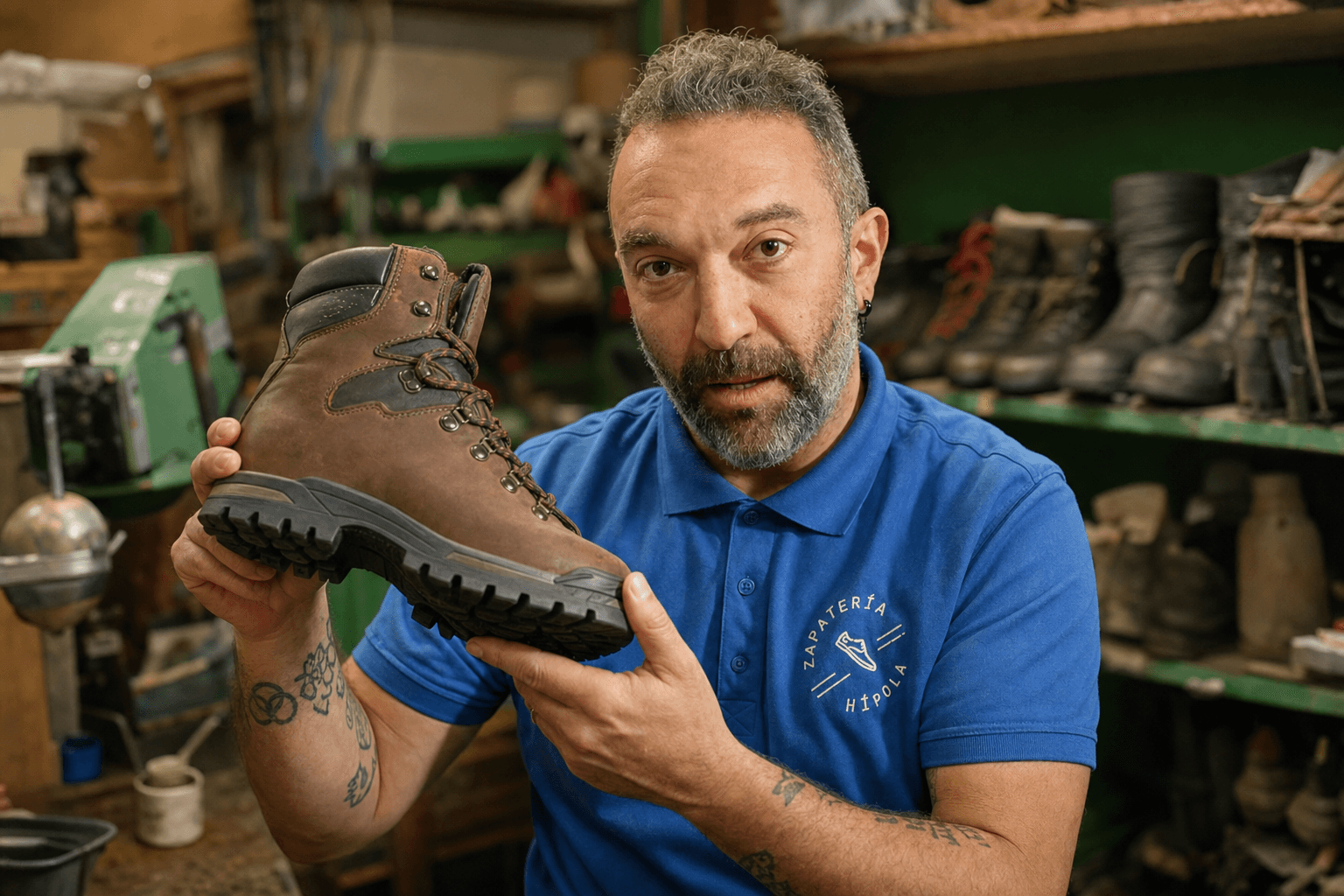
Our recommendation: to get started, either works. But if you're heading into the mountains with some ascent, go for a mid-cut boot. The ankle support can save you from a silly twist on a descent.
What to look for in your first boot
• Waterproofing — an inner membrane that repels water. Essential for autumn and winter in Spain.
• A grippy outsole — well-defined lugs that bite into uneven terrain.
• A reinforced toe cap — protects your toes from rocks.
• The right fit — usually half a size more than your street size, because your foot swells as you walk. Always try them on with a mountain sock.
• Cushioning — to absorb the impact on descents, which is where the knee suffers most.
The mistake we see most in the workshop
By far the most common: someone buys a gorgeous pair of boots, wears them straight out on a long route and comes back with blisters the size of a coin. Boots need breaking in: wear them first on two or three short walks before the big outing.
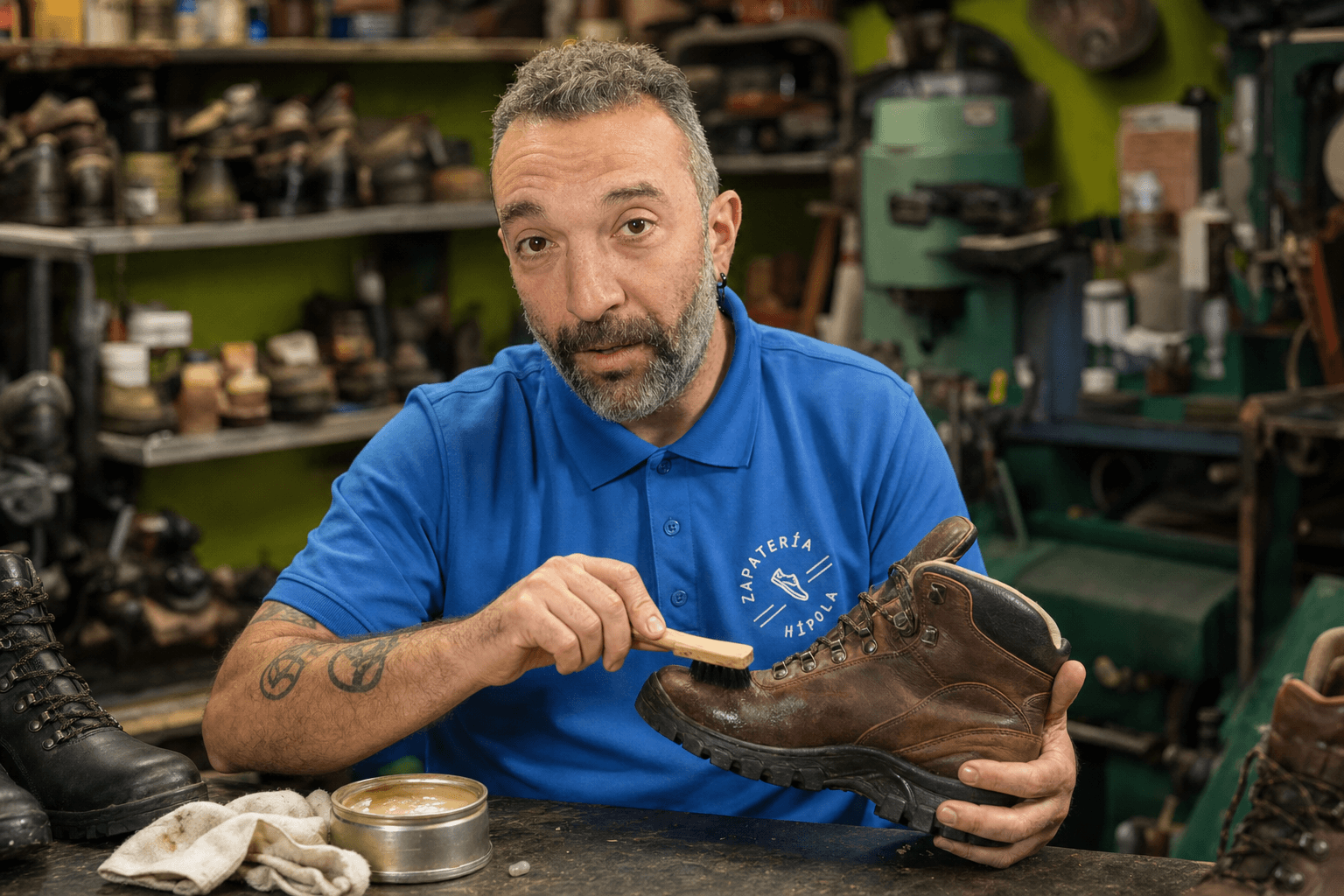
And look after them. A well-treated boot (waterproofing and cleaning after every muddy outing) will last you between 5 and 10 years. The ones that arrive at the workshop asking for a second life are nearly always boots that were worth caring for from the start.
Boots to get started
To get going without spending much, the Quechua NH100 boots (€17.99) do the job for gentle routes.
But if you ask us which is the first proper footwear, the one we recommend to anyone serious about it, it's the Quechua NH500 waterproof leather boots (€69.99), also in a women's version (€59.99). Leather, a membrane and an outsole that, once it wears out in a few years, can be resoled. For us that's the difference between buying well and buying twice.
If you'd rather have lightness for easy routes, the Quechua NH100 WP waterproof hiking shoes (€34.99, women's version) are a good way in.
And don't forget your socks
Socks are as important as the boots. A cotton sock inside a technical boot means guaranteed blisters. You need a technical mid-cut, anti-chafing sock. A pair of Quechua Hike 50 socks (€4.99 for the two pairs) to start, or the Quechua MH500 anti-chafing socks (€14.99) if your foot is prone to blisters.
The backpack and what you put in it
For day outings, a 15 to 25 litre backpack is plenty. You don't need anything huge. A Quechua NH100 20L backpack (€7.99) is more than enough to start with.
What can't be missing inside:
• Water — at least 1.5 to 2 litres (more in summer). The rule: half a litre per hour of walking.
• Food — nuts, bars, fruit. Something light and energising.
• The third layer — always, even if the sun's out when you set off.
• A basic first-aid kit — plasters, bandage, disinfectant.
• A head torch or torch — even if you plan to be back in daylight.
• Sun protection and a cap, and the map downloaded offline on your phone.
The 5 mistakes we see most among beginners
1. Wearing new boots on a long route. Break them in first on short walks.
2. Wearing cotton clothing. It holds sweat and chills you. Always technical clothing.
3. Not checking the weather. The mountains can go from sun to storm in two hours.
4. Overestimating your level. Start short. You can always do more tomorrow.
5. Setting off without telling anyone. Say where you're going and when you expect to be back.
When to bring your boots to the workshop
A pair of hiking boots, well cared for, lasts between 5 and 10 years. The secret lies in maintenance and in knowing when they need a check-up.
Signs your boots should pay a visit to the workshop:
• The outsole is starting to peel away at the sides.
• The lugs are so worn they no longer grip on descents.
• You notice your foot moving around inside the boot more than normal (the insole also gives way over the years).
• They've lost their waterproofing even though you treat them with spray.
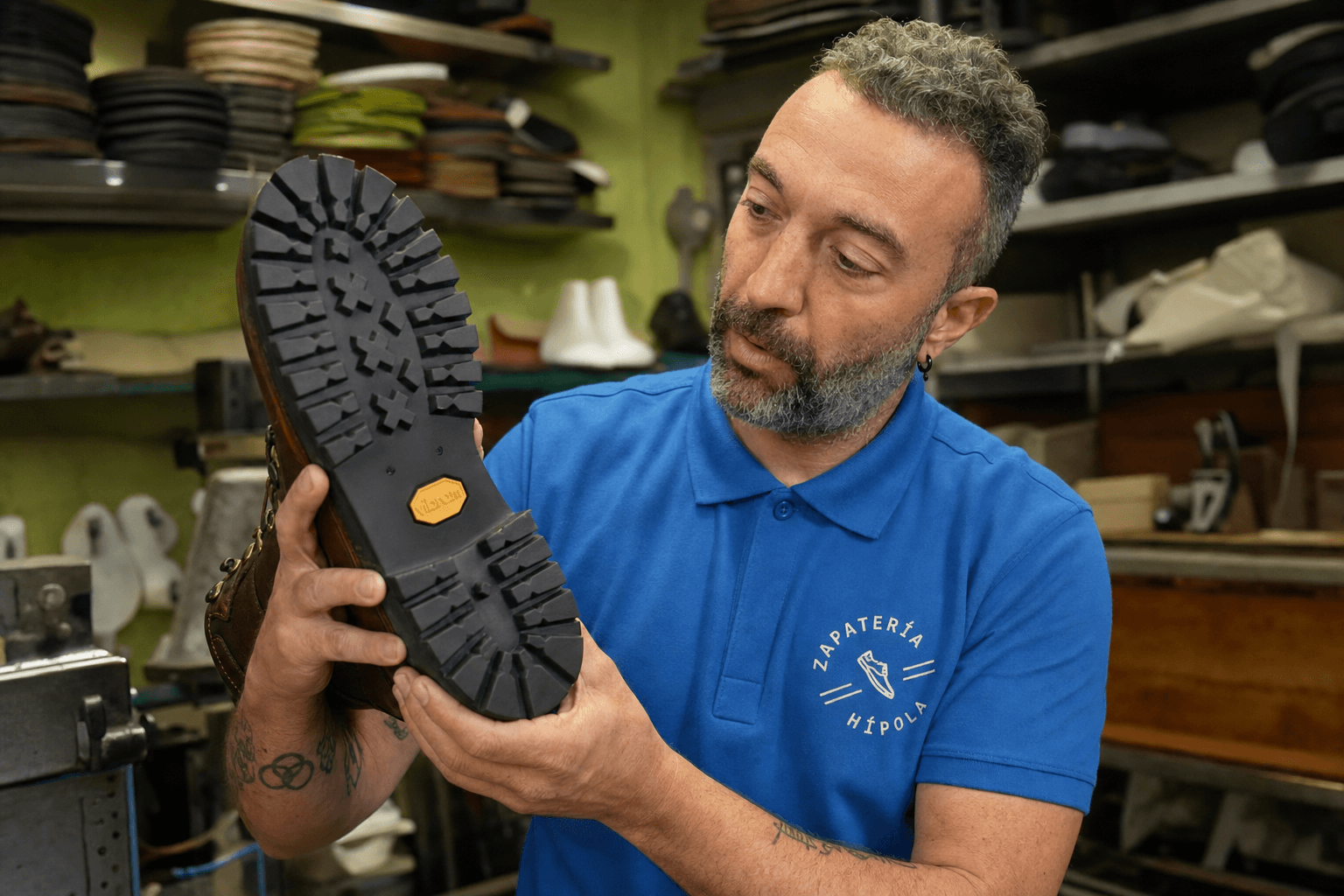
At Hípola we've been replacing Vibram outsoles, waterproofing and bringing boots back to life since 1986, boots that looked fit for the bin. A good repair costs a fraction of a new pair and gives you 3 to 5 more years of use. And all our resoles come with a heat-sealed bond at the outsole-upper join.
If your hiking boots need a check-up, bring them to the workshop or request home collection from anywhere in Spain.
Kit summary, with prices
Here's everything we've recommended at a glance. Approximate Decathlon prices: the shop shows the price and availability in real time.
| Product | Price | |
|---|---|---|
| Quechua MH100 technical T-shirt (base layer) | €4.99 | See on Decathlon |
| Forclaz MT500 merino T-shirt (premium base layer) | €54.99 | See on Decathlon |
| Quechua MH100 fleece (mid layer) | €8.99 | See on Decathlon |
| Quechua NH500 waterproof jacket (men's) | €34.99 | See on Decathlon |
| Quechua NH500 waterproof jacket (women's) | €38.99 | See on Decathlon |
| Quechua NH100 trekking trousers | €13.99 | See on Decathlon |
| Quechua NH100 boots (starter) | €17.99 | See on Decathlon |
| Quechua NH500 waterproof boots (men's) | €69.99 | See on Decathlon |
| Quechua NH500 waterproof boots (women's) | €59.99 | See on Decathlon |
| Quechua NH100 WP shoes (men's) | €34.99 | See on Decathlon |
| Quechua NH100 WP shoes (women's) | €34.99 | See on Decathlon |
| Quechua Hike 50 socks (2 pairs) | €4.99 | See on Decathlon |
| Quechua MH500 anti-chafing socks | €14.99 | See on Decathlon |
| Quechua NH100 20L backpack | €7.99 | See on Decathlon |
Hiking is the most accessible sport in the world. You don't need to spend much to start well: a good pair of boots, basic technical clothing and common sense. The rest comes on its own, with the kilometres.
If you want to start with the basic kit, Decathlon has everything you need without breaking the bank. And when your boots have covered hundreds of kilometres with you, at Hípola we make sure they keep on going.