How to care for your hiking boots in winter · workshop maintenance
Cleaning, drying, waxing, storage. 7 habits that double the life of your hiking boots in winter, from someone who's been repairing them for 40 years.
Most of the hiking boots that come into the workshop with serious damage don't get there through heavy use. They get there through poor maintenance. A good pair of Scarpa or La Sportiva boots can last 15 years if you treat them well — or 3 if you leave them wet in the hallway every weekend.
These are the 7 habits we recommend to our affiliated club members and that we see again and again in the boots that reach the workshop in immaculate condition after many years.
1. Brush the boot the moment you get back
Wet mud dries into an abrasive paste that attacks the leather from the inside and stresses the Gore-Tex membrane through pressure. Five minutes with a semi-stiff brush as soon as you're back from the mountain saves you €100 in leather treatment later on.
Brush it dry, not with a hose. The brush removes loose mud without forcing water in where it shouldn't go.
2. If they've been soaked, dry them out with newspaper
After a day of rain or crossing a stream, don't put them on the radiator to dry. Never. Direct heat warps the leather and dries out the stitching.
Stuff crumpled newspaper inside (loosely, not packed) and leave them in a ventilated spot at room temperature. The newspaper draws water out from inside. Change the newspaper every 12 hours until they're dry.
3. Wax the leather before every season
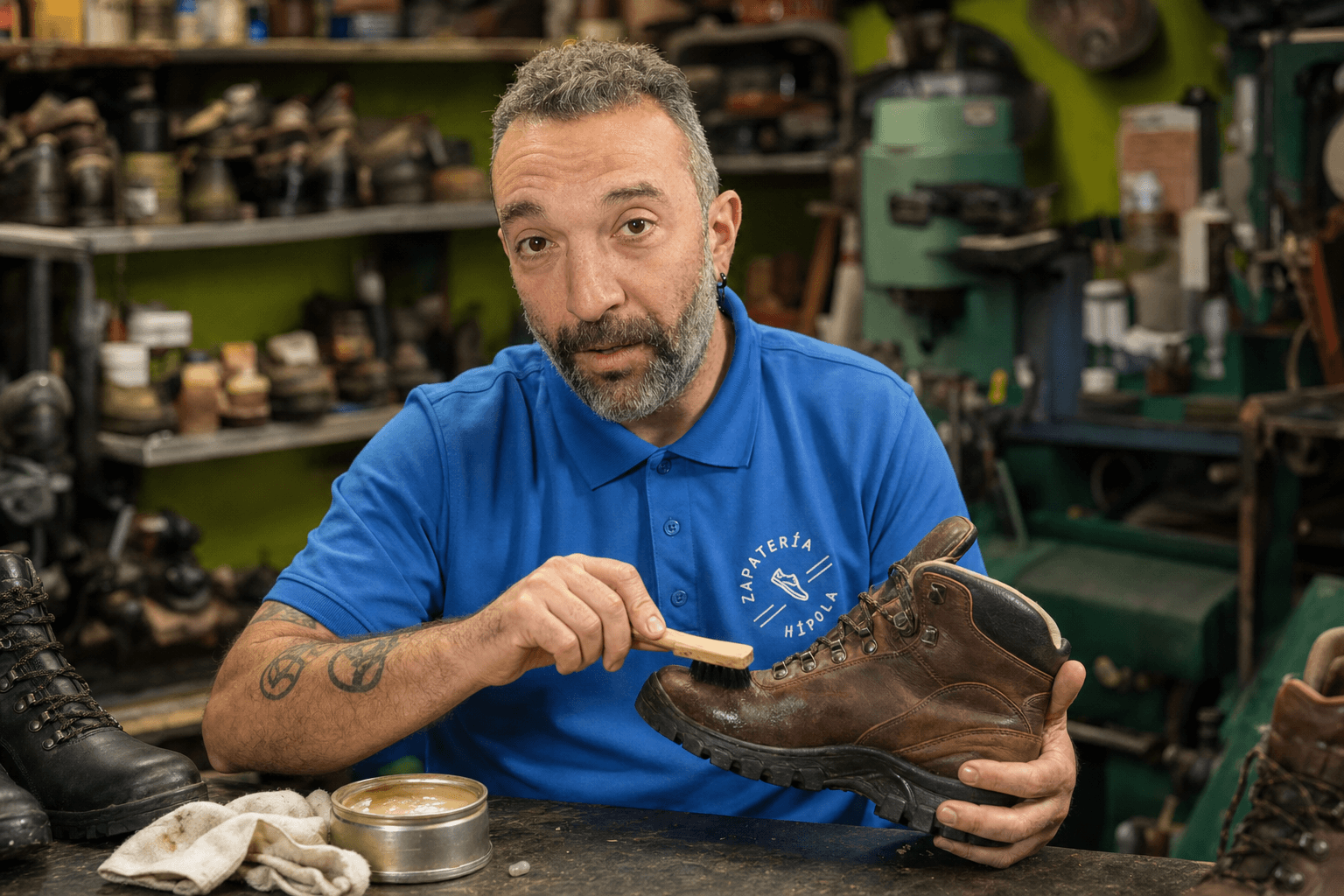
Nubuck or full-grain leather needs a coat of wax every 3-6 months. We recommend products made specifically for mountain footwear (Nikwax, Granger's, Collonil), not classic shoe polish, which clogs the pores and stops the membrane breathing.
Apply with a soft cloth in a thin layer, let it absorb for 30 minutes, then buff with a soft brush. If you saw moisture get through the leather last winter, waxing prevents it the following season.
4. Look after the Gore-Tex membrane without suffocating it
The membrane works because it has microscopic pores. Any layer of grease, silicone or unsuitable product can seal those pores and ruin it.
If you're going to apply a waterproofing treatment, use only membrane-compatible products (the label says so clearly). If in doubt, ask at the workshop first.
5. Don't store them wet or squashed
After every outing, make sure the boot is dry before you put it away. A damp boot in a closed cupboard develops mould in the lining and rots the leather from the inside.
Don't stack them or stuff them into compressed bags either. The boot's structure needs to keep its shape. If you're travelling with them, pack crumpled paper inside for the journey.
6. Replace the laces before they snap
An old frayed lace can break halfway through a day out. That's €4 of lace and a 5-minute swap. If the laces look shiny from wear or have loose threads, replace them before your next outing.
7. Check the sole and stitching after every season
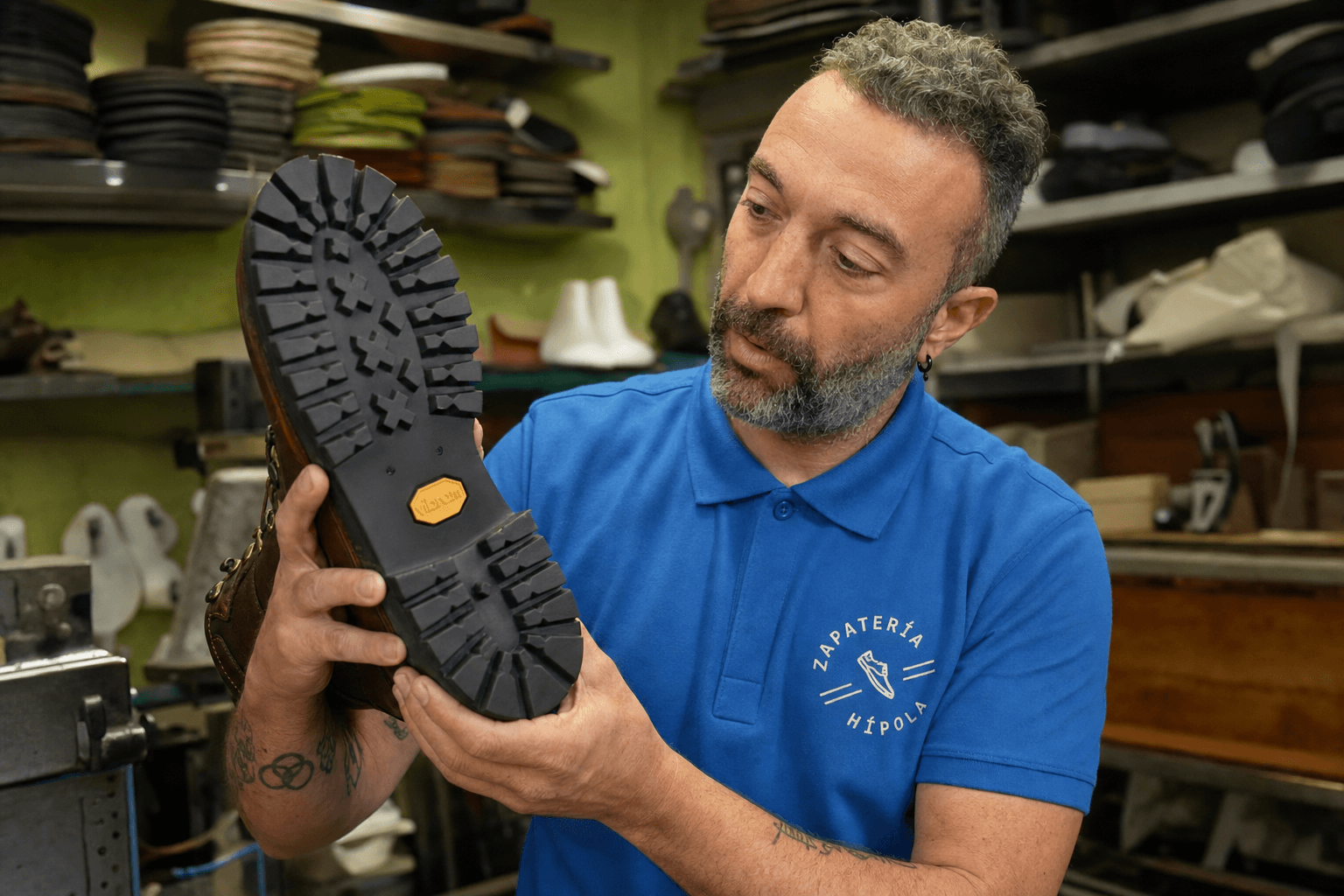
At the end of each season (May for summer hiking, October for high mountain), get the boots out and inspect them in good light: is there any visible separation between sole and upper? Any loose stitching? Any cracked patch of leather?
Spotting those signs in time means a €30 repair instead of a full €100 resole once the damage has progressed.
If you'd like a free professional inspection, drop by the workshop with the boot in May or September. It takes us 5 minutes to give you the diagnosis.
What we do NOT recommend
❌ Machine washing. Never. It destroys the membrane, warps the upper and damages the stitching.
❌ Drying in direct sun or on a radiator. It dries out the leather and breaks down the sole adhesive.
❌ Household oils (olive oil, pure glycerine) on technical leather. They seal the pores rather than nourish.
❌ Storing the boots inside their original box sealed up. The box traps moisture if you're not certain they're dry.