How to choose a Vibram sole for your hiking boot (2026 guide)
Megagrip, Mont, Ibex, Mulaz: which Vibram compound to choose based on terrain, activity and your boot's upper. The workshop's honest guide.
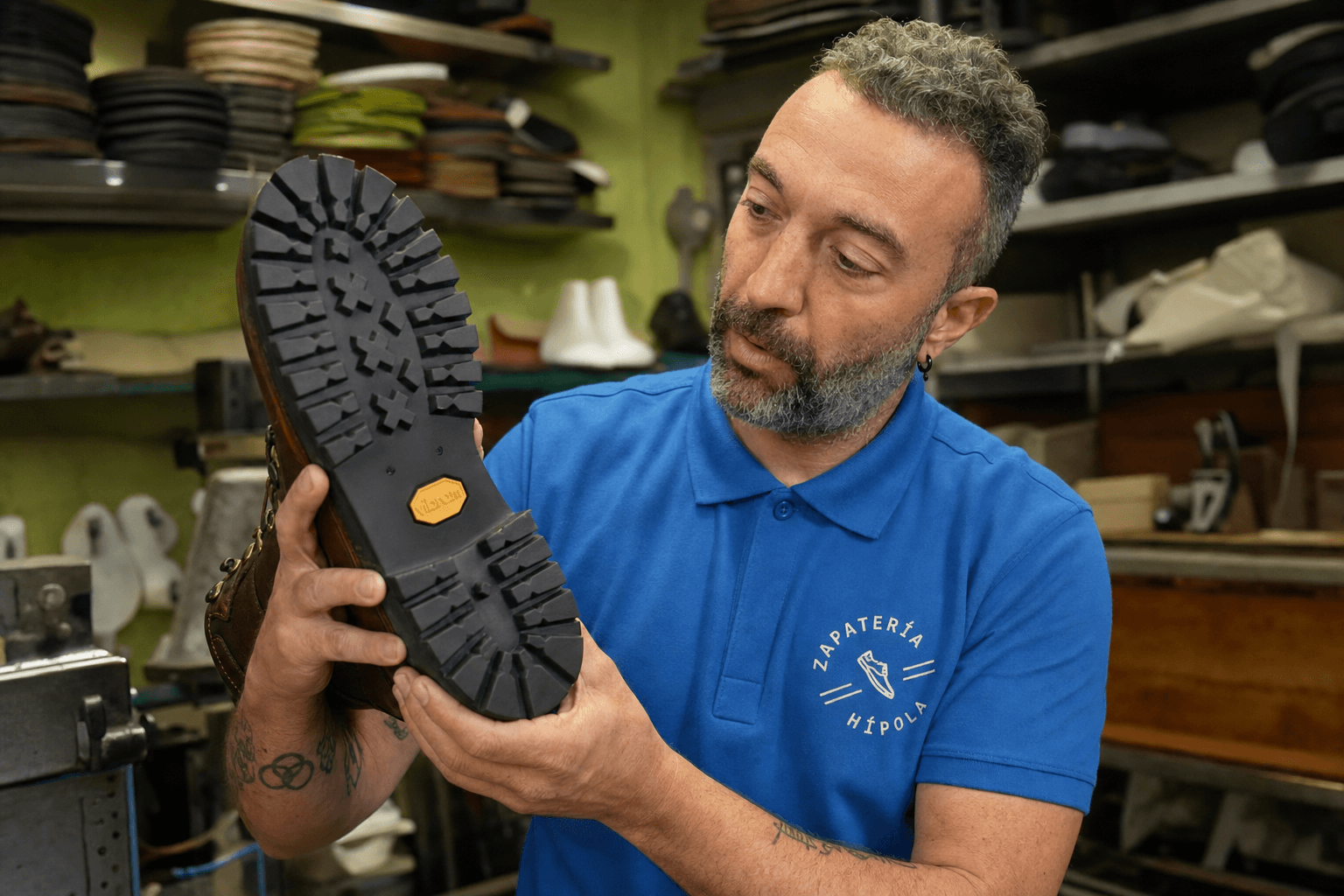
Vibram makes more than 30 different rubber compounds and each one is designed for a specific use. When a boot arrives at the workshop with a worn outsole, one of the first decisions we make is which compound to use for the resole. This guide sums up how we decide after 40+ years fitting Vibram to hiking boots in Madrid.
The short answer: the compound should match the boot's real use, not the factory model. It's very common to receive a boot whose owner bought it thinking about high-mountain trips and ends up using it only on Sierra de Guadarrama trails. Resoling it with the original compound would be a mistake. And before choosing a compound there is an earlier call to make: whether that boot is worth resoling at all.
Megagrip: the all-rounder
It's the most versatile compound and the one we fit most often. It combines excellent dry grip with very noticeable wet grip and slow wear. It works well on Pedriza granite, Pyrenean slate and forest tracks.
We recommend it on trekking and serious hiking boots (Scarpa Mojito, Lowa Renegade, La Sportiva Trango Tower, Asolo Falcon) whose owner does a mix of dry and wet outings. If you're torn between compounds, Megagrip is the safe bet.
Mont and Mulaz: technical high mountain
Mont is a harder compound designed for mountaineering, slab climbing in boots and very abrasive rock. It withstands the rubbing of crampons and friction against granite without losing its shape. In return, grip on polished or very wet surfaces is somewhat lower than Megagrip.
Mulaz is the evolution: the same hardness but with a more aggressive tread. We use it on double boots (Scarpa Phantom 8000, La Sportiva G2 Evo) and on lightweight mountaineering boots (Trango Tower Extreme).
If your use is the Picos de Europa in winter, glacier ascents and via ferratas with long rock sections, Mont/Mulaz is the right choice. For the Sierra de Madrid in dry conditions, they're too hard and you'll notice slips where with Megagrip you wouldn't have had any.
Ibex: snow and mixed terrain
Ibex is a soft compound with a very deep tread, designed to brake and grip on hard snow and mixed rock-snow terrain. We recommend it on boots that spend a lot of time above 2,500 m in winter.
The trade-off is rapid wear on dry ground: if you use your Ibex boot in summer on trails, you'll have worn it bald in a single season. If you only bring it out in winter, it lasts many years.
Vibram Idea (compound)
Idea is the softest and most aggressive compound in the Vibram catalogue, designed for technical approach and mixed via ferratas. We use it only on the customer's specific request because it wears out very quickly on trails.
What we decide in the workshop
When we receive your boot, our process is:
1. A photo via WhatsApp + a description of the real use (Sierra de Madrid, the Pyrenees, glacier mountaineering, sport climbing, mixed terrain…).
2. Analysis of the condition of the upper (leather, textile, Gore-Tex) and the midsole. If the midsole is compressed, the compound matters less: it has to be changed first.
3. A recommendation with a technical rather than a commercial argument: if Megagrip is enough for you, we won't fit Mont (it's more expensive and worse for your use).
4. A fixed quote via WhatsApp before we touch anything.
Heat-sealing on every resole
Whatever the compound, every Vibram outsole we bond comes with our lifetime guarantee on the outsole-upper join via the Pegafort system. If the bond fails at any point (not through an extreme knock or unreasonable use), the re-bond is free.
The guarantee covers the bond, not the wear of the rubber. A Megagrip outsole used on abrasive terrain may need a new sole in 600-800 km; that's service life, not a defect.