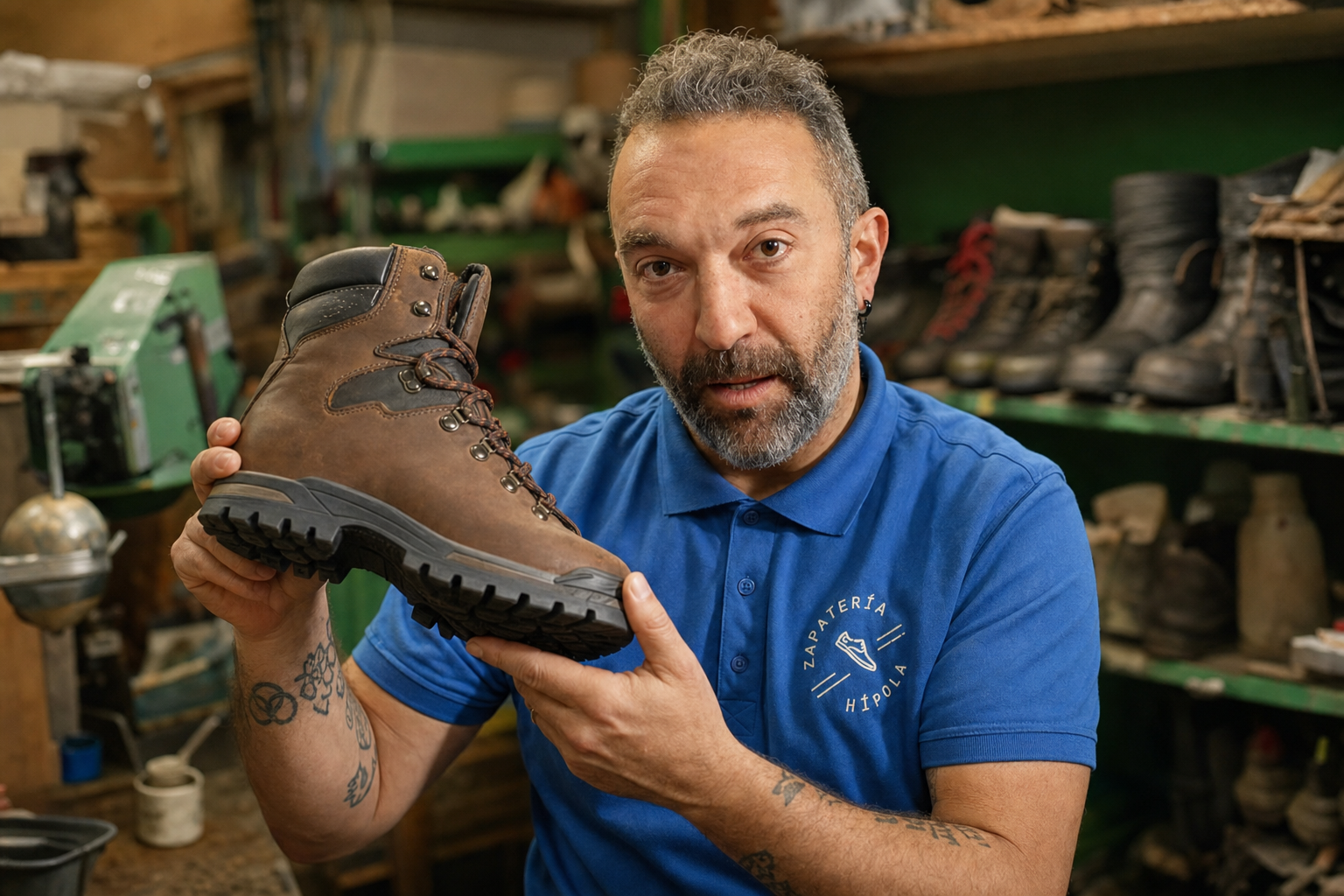
Leather shoe repair: what can be fixed
Heel tips, half-soles, a detached sole or an open seam: what can be fixed on a leather shoe, what it costs and when it isn't worth it.
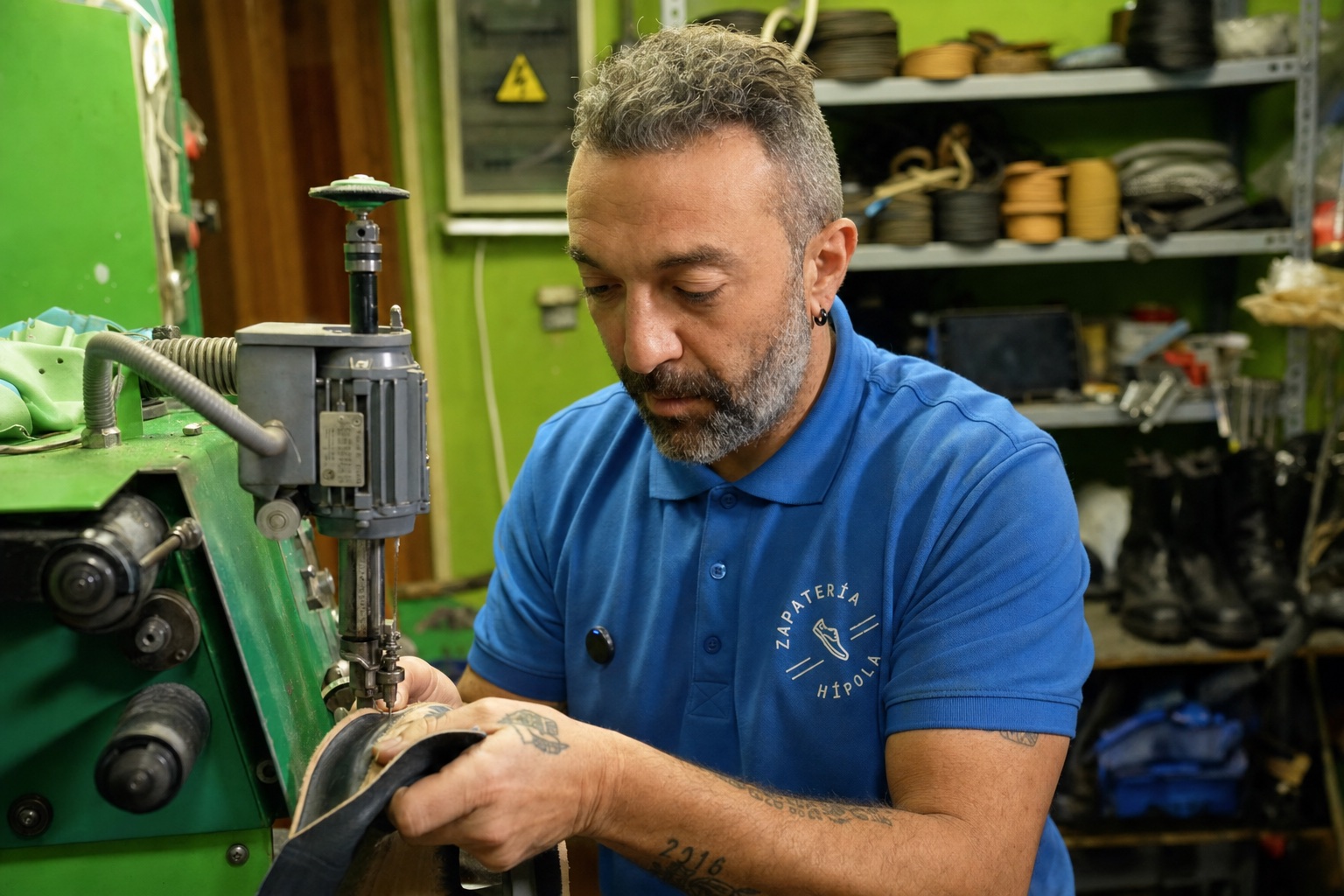
Most leather shoes that come into the workshop are nowhere near the bin. They need new heel tips, a half-sole or a seam stitched back up. The trouble is that hardly anyone knows what the problem with their shoe is called, and that makes even asking for a quote harder than it should be.
This guide translates what you notice into what we do, with what the most common repairs cost and when it isn't worth it. If you already know what you need, the full price list is on our leather and dress shoe repair page.
What you notice and what it's called in the workshop
With this table you can send us a photo on WhatsApp saying exactly what is wrong with your shoe, and we can give you an accurate quote first time.
| What you notice | What it's called | What gets done |
|---|---|---|
| The heel clicks when you walk or the nail shows | Worn heel tip | New heel tips |
| The sole is thin at the toe | Sole worn at the front | Leather or rubber half-sole |
| There is a hole in the sole | Worn-through sole | Full sole |
| It splits along the side or at the heel | Open seam | Restitching |
| The sole is coming away from the shoe | Detached sole | Re-glued, or a new sole if it won't hold |
| The boot zip won't close | Broken zip | New zip |
Heel tips and half-soles: when they're due
The heel tip is the rubber piece under the heel. It needs replacing before it wears right through: once the wear reaches the heel itself, a tip is no longer enough. If you can hear the nail when you walk, you've left it too late. Heel tips are done on the spot if the workshop is free.
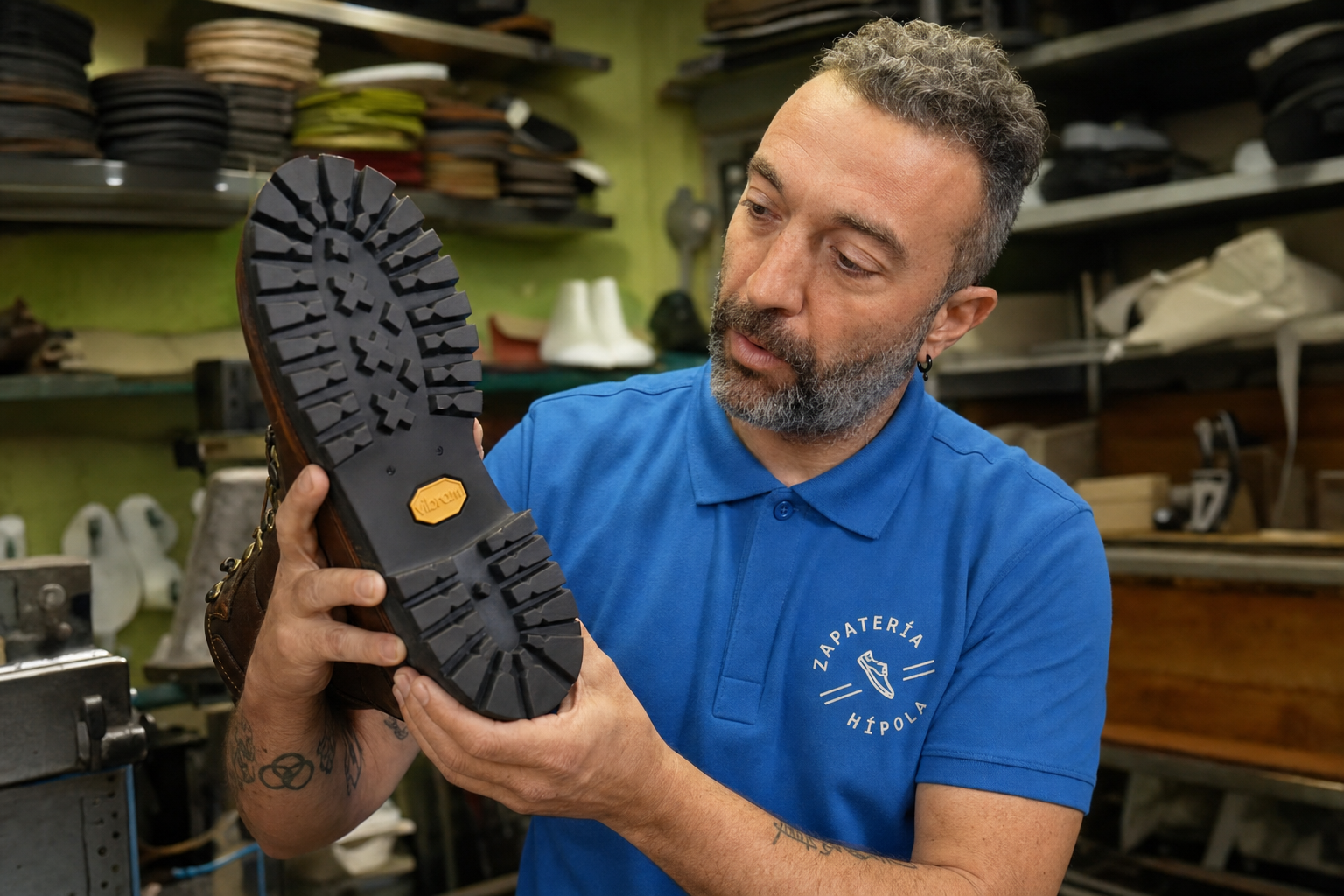
The half-sole protects the front of the shoe, which is where it wears most. On leather-soled shoes, fitting one before the original sole thins out makes the original sole last far longer. It can be leather or rubber, depending on the shoe and how you wear it; a rubber one also grips better on wet pavement.
If the sole already has a hole, a half-sole won't do: it needs a full sole, leather or rubber. Rubber lasts longer and copes better with rain; leather is the traditional choice for a classic dress shoe.
A sole coming away: when it can be re-glued
It depends on how the shoe was made. If the sole was bonded, the rest of it is lifted off, both surfaces are cleaned and it's bonded back on. If it was stitched and the seam has opened, we'll tell you from the photo whether it can be restitched or needs a new sole. Why factory bonding ends up failing is explained, with sports shoes, in our article on the Pegafort system.
What you shouldn't do is fix it at home with superglue. It goes hard, can't take the flex of every step and leaves residue that has to be removed before the job can be done properly. It's one of the mistakes that most often turns a simple repair into an expensive one.
Open seams and scuffed leather
An open seam is restitched with waxed thread, not staples. It's one of the cheapest repairs there is and, caught early, one that adds the most life to a shoe: a seam opening at the heel ends up tearing the leather if you keep wearing the shoe.
For scuffs and dry leather, polishing and conditioning help, and they're included with most jobs. They won't erase a deep cut, but they bring colour and suppleness back to leather that was starting to crack.
Boots and ankle boots, leather or nubuck, take the same repairs: restitching, reinforced soles and zips.
When it isn't worth repairing
A good leather shoe, however worn, even one you've inherited, can almost always be repaired. But there are cases where it isn't worth it, and we'd rather tell you before we start, from the photo if it shows:
Cracked leather that tears when it's stitched. If the needle cuts it, the seam won't hold and the repair won't last.
Injection-moulded soles on very cheap shoes. The sole is fused to the upper and sometimes there's nothing left to stitch or bond a new one to that will hold.
When the repair costs more than the shoe. We'll tell you straight, even if it means losing the job.
Quotes and turnaround
To give you an idea, the most common repairs start at €6.50 for restitching, €8.50 for heel tips and €12 for a half-sole. A full sole depends on whether it's rubber or leather, and everything else is on the leather shoe repair price list.
We give you the final price as a fixed quote on WhatsApp from a photo, before we start and with no obligation. Heel tips are done on the spot if the workshop is free; everything else takes 5 to 10 working days from when the shoe comes in.
If you're not in Madrid, we can still repair them through our nationwide shipping service: a courier collects your shoes from home and we send them back the same way. Add 2 or 3 days each way to the turnaround.