Ski touring boots: what gets resoled and what the shell decides
The rubber sole wears out on the approaches and gets resoled with a Ski Alp sole from €75. The shell and the liner decide whether it's worth it. How to check them before the season starts.
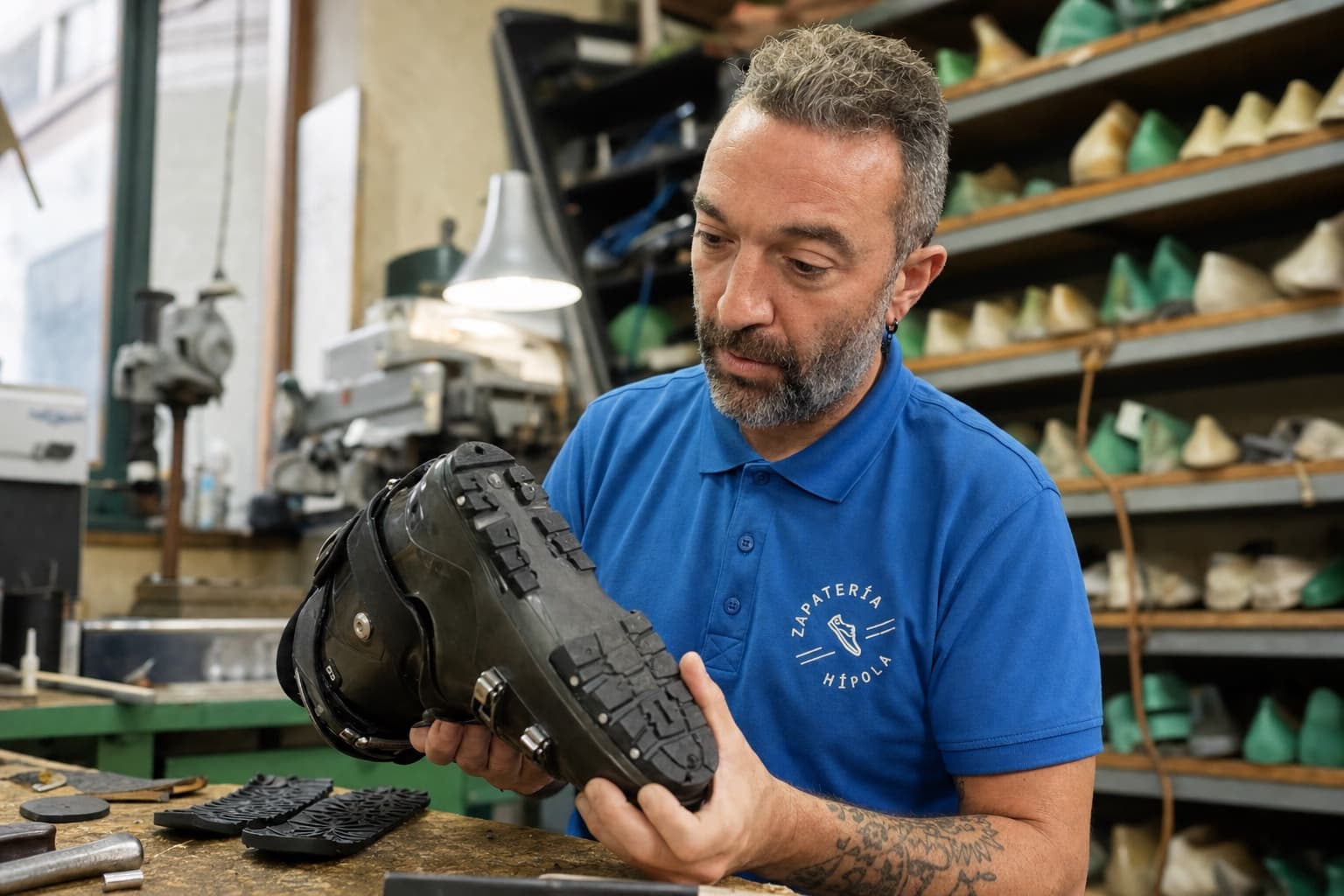
Ski touring boots don't wear out skiing. They wear out walking: the forest track on the approach, the col where the snow has already gone, the rocky ridge with the boots on and the skis on your pack. And once the rubber sole goes smooth or peels at the toe, the boot is still perfectly good for skiing and fairly bad at everything else.
This is the guide to deciding whether a pair of touring boots gets resoled or not. We're publishing it before the season starts because now is when you need to look at them: in January, after the first good snowfall, there's no time left. If you'd rather skip ahead, the service is at ski touring boot resoling.
A touring boot is four parts, and only one wears out walking
To decide, you need to split the boot into what it is:
The shell. The rigid plastic, with the ankle pivot and the metal binding inserts at toe and heel. It's the expensive part and the one that says whether the boot is still alive.
The liner. The soft part inside. It packs out over the years, and that's what makes a boot that used to fit perfectly start to float.
The buckles and the strap. Simple hardware. A broken buckle gets replaced in the workshop.
The sole. The lugged rubber bonded to the shell. It's the only thing touching the ground when you're not on skis, which is why it's what wears on a boot that's looked after.
Resoling means replacing only that fourth part. That's why it makes sense when the other three are fine, and doesn't when they aren't.
What does get resoled
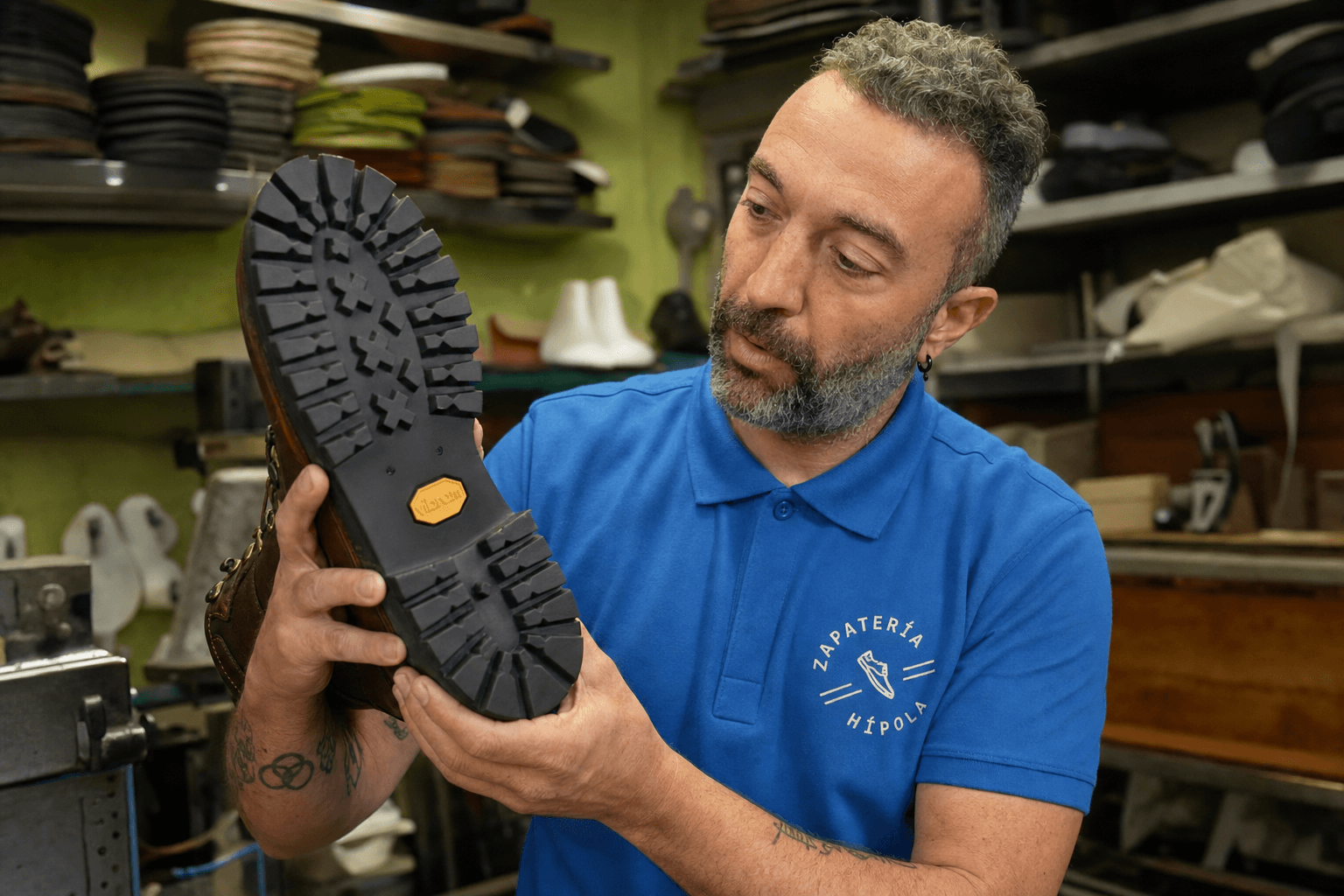
The touring sole is replaced with a Ski Alp type sole, using Vibram compounds (Megagrip for grip on wet rock, Lite Base when you want to shave weight), bonded and heat-sealed to the shell. The bonding is explained in the article on the Pegafort system. These are the signs it's time:
Smooth lugs at toe and heel. That's the first thing to go, because that's where you push off climbing and brake walking down. When you slip on the ridge rock with your boots on, this is why.
Sole peeling at the toe. A gap opens between the rubber and the plastic. The sooner it's fixed the better, because water and snow get in and end up lifting the rest.
Cracked or dried-out rubber. It happens to boots that have slept for years in a storage room. The shell holds up, the rubber doesn't.
In all of these cases the boot gets resoled from €75 and comes back with a new sole that keeps the toe and heel dimensions, which is what keeps it stepping in and locking the same way in your binding.
What the shell decides, not the sole
There are three things a new sole doesn't fix, and they're worth checking before asking for a quote:
Cracks in the plastic. Especially around the ankle pivot and the insert area. A shell cracked at those points isn't a boot to resole: it's a boot to retire or to have the brand look at.
Packed-out liner. If your foot floats inside and you've already cranked the buckles to the last notch, the problem isn't underneath. A new or heat-moulded liner from the brand brings the fit back; the sole has nothing to do with it.
Damaged binding inserts. The metal inserts at toe and heel are what a pin binding grabs. If they're deformed or have pulled out of the plastic, talk to the brand before doing anything to the sole. The workshop works on the sole; the fixed parts of the shell aren't touched.
That's why when you ask for a quote we ask for two photos, not one: the sole, to see the wear, and the shell with the binding, to see whether it's worth it.
Doing the maths
A new mid-range pair of touring boots runs to €400 or €500, and the light carbon ones a good deal more. The resole is €75. The rule is simple:
| State of the boot | What to do | What it costs you |
|---|---|---|
| Sound shell, good liner, worn sole | Resole | From €75 |
| Sound shell, packed-out liner, worn sole | New liner from the brand + resole | Liner on top + €75 |
| Shell cracked at the pivot or inserts | Don't resole | New boots |
| Sole peeling but not worn | Re-bond | From €28 a pair |
When to send them
Now. October and the first half of November is when touring boots are in the cupboard and nobody misses them. From December on, everyone wants theirs back for the following weekend. In November the rough turnaround for a full resole is two weeks, and we text you as soon as they're ready.
If you're outside Madrid it works the same as with any other footwear: you send the photo on WhatsApp, we give you a fixed price, and the courier calls at your door for €18 round trip on the mainland. Ski boots travel fine in their own box or a cardboard one with a bit of padding.
And one note so there's no doubt: we work on ski touring and ski mountaineering boots, the ones with a lugged rubber sole. Rigid alpine piste boots, with a flat plastic sole, don't get resoled here. Snowboard boots, yes: the original sole gets re-bonded, or they're resoled with Arctic Grip.