Vibram history: the sole that changed mountaineering
From a 1935 tragedy in the Alps to the yellow octagon: how Vitale Bramani invented the Carrarmato sole and changed mountain footwear forever.
Some brands make products. Others end up part of history. Vibram belongs to the second group.
Its yellow octagon shows up today on mountaineering boots, trail shoes, climbing shoes, work boots and even city footwear. Behind that logo is a story that began in the Italian Alps in the 1930s, with six deaths and one obsessed mountaineer, and that changed the way we walk in the mountains for good.
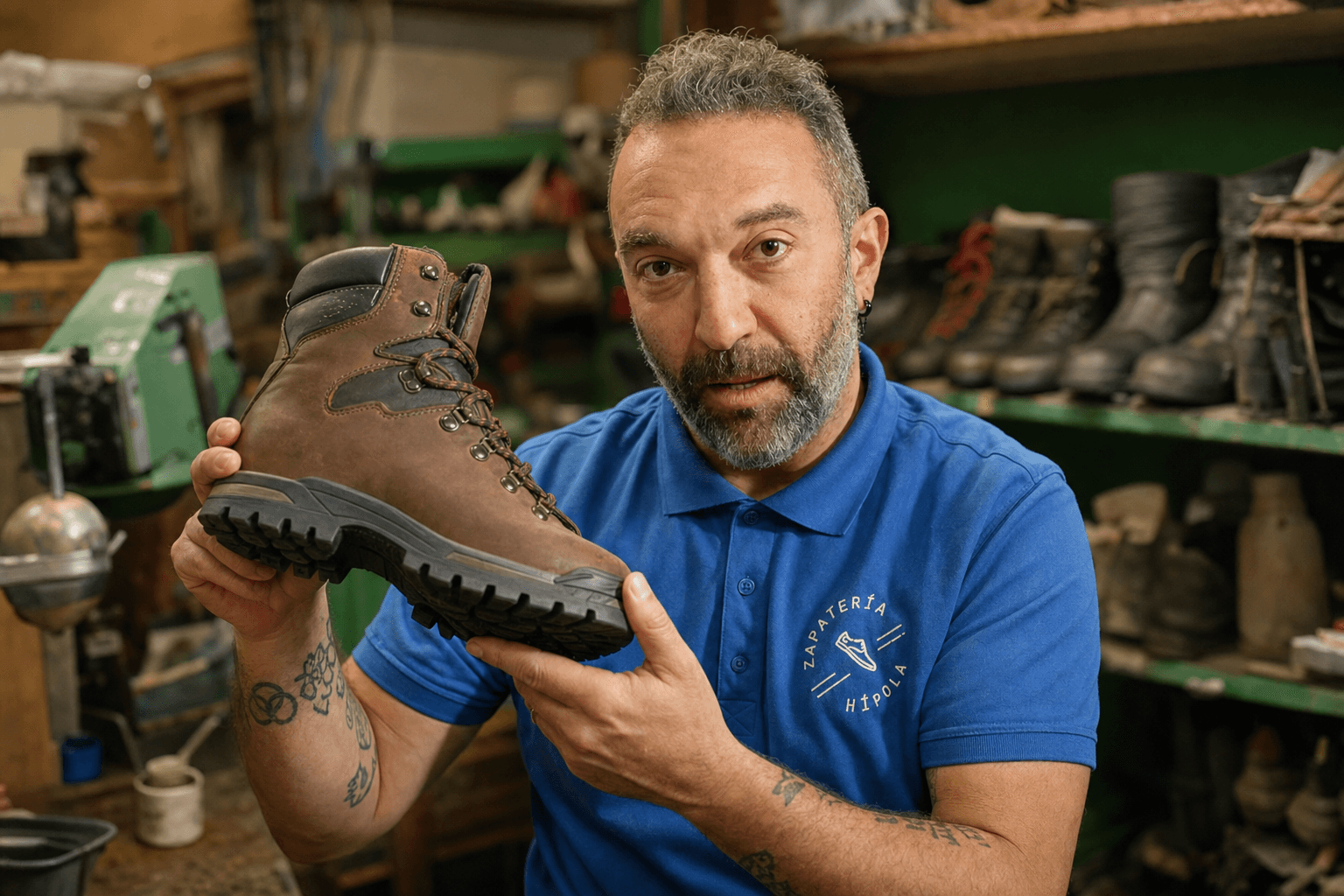
We work with Vibram every day in the workshop. It felt right to tell you where it comes from.
Vitale Bramani: a mountaineer before a businessman
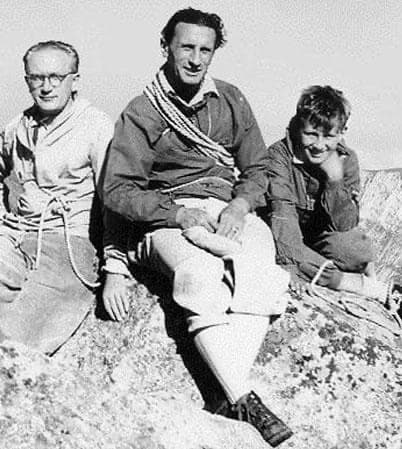
Vitale Bramani was born in Milan on 3 May 1900. He fell for the mountains young and became one of Italy's best known climbers and guides. In 1933 the Italian Alpine Club awarded him its gold medal for alpine valour.
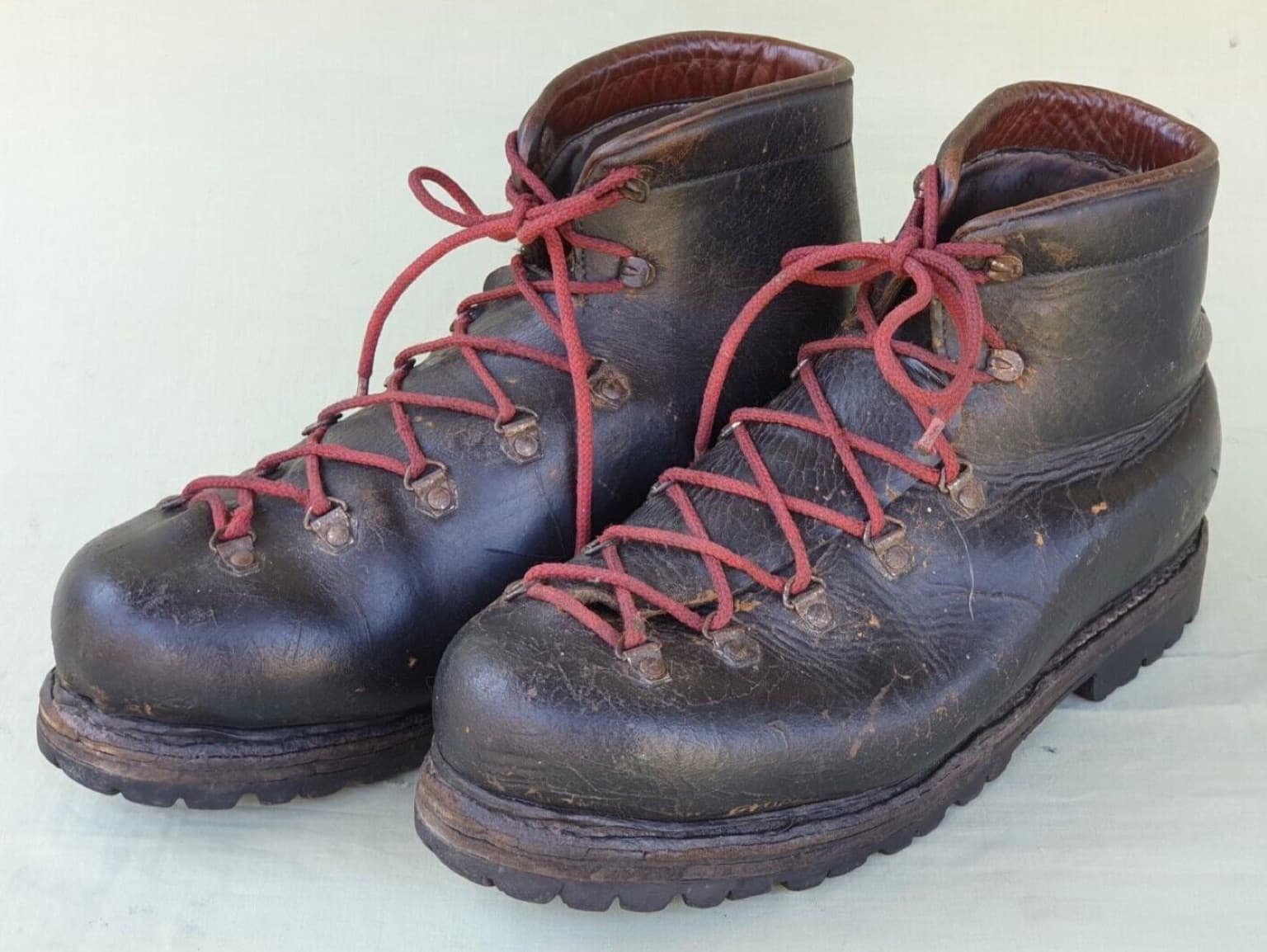
Bramani knew the limits of the footwear of his day first hand. Boots had leather soles and, for grip, metal hobnails were driven around the edge. They were called *tricouni*.
The system worked reasonably well on dry rock. On snow, ice or mixed ground it was another story: the nails clogged, they channelled cold straight into the foot and they weighed a ton. And they needed replacing constantly.
The Punta Rasica tragedy, 1935
On 15 September 1935, Bramani was on an outing to Punta Rasica, in Val Bregaglia, with the SEM (Società Escursionisti Milanesi), where he worked as a guide.
The weather turned without warning. Six of his companions froze to death, unable to make it back to the refuge with the equipment they had.
It was not a fall or an avalanche. It was the cold, the exhaustion and footwear that could not cope. Bramani came down with one question stuck in his head:
Could you build a sole that grips like hobnails but works on any terrain?
Two years of testing later, he had the answer.
The Carrarmato is born
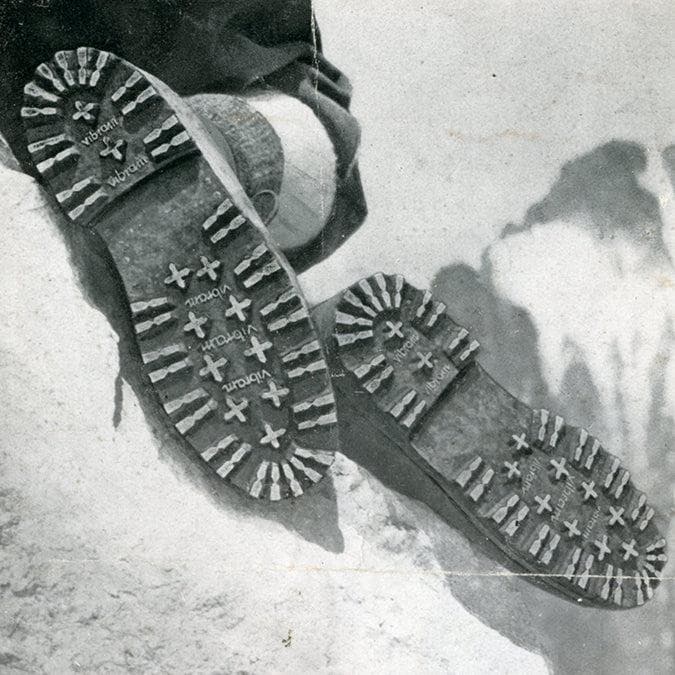
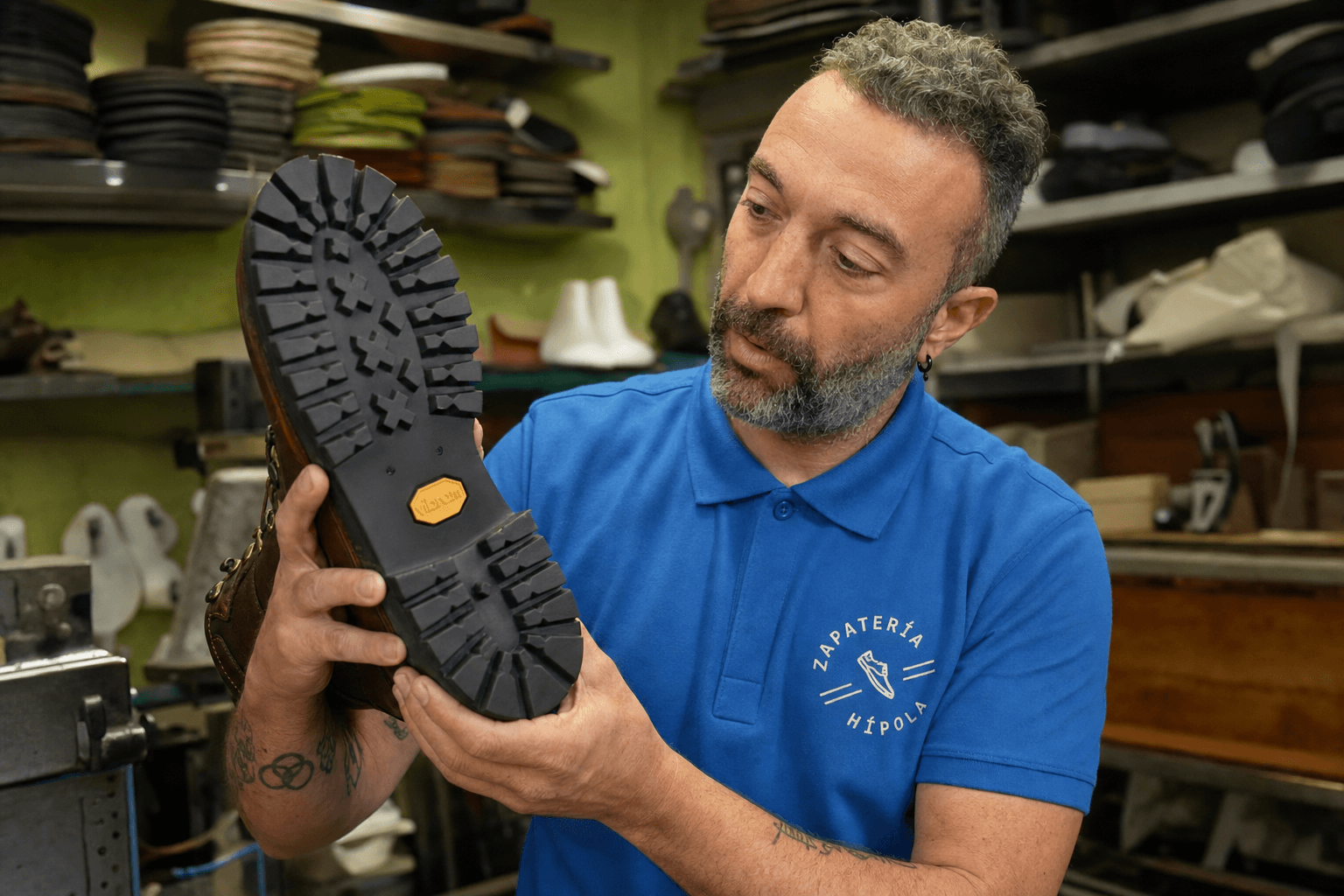
In 1937 the answer arrived: the Carrarmato, the first serious rubber sole built specifically for mountaineering. The name comes from *carro armato*, Italian for tank, after the tread's caterpillar look.
Bramani started with wooden prototypes and ended up with vulcanised rubber, developed in Pirelli's laboratories with the help of engineer Brambilla. He patented it in 1938.
The design was a complete break. Instead of metal nails, large rubber lugs laid out with purpose to deliver grip, abrasion resistance, snow and mud clearing, and a level of comfort hobnailed boots never had.
There is a lovely detail in that tread: the cross-shaped lugs in the centre echo summit crosses, and the radial crown around the edge recalls the floor of Milan's Galleria Vittorio Emanuele II. Bramani put his city and his mountains into the same sole.
Where the name Vibram comes from
This is the part almost nobody knows.
Vibram means nothing in Italian. It is the syllables of its inventor: VI-tale BRAM-ani.
Bramani already signed his articles in the Italian Alpine Club magazine that way. When the sole needed a name, he used his own signature.
So every time you see a yellow octagon on a sole, you are reading the name of a Milanese mountaineer who lost six friends in a storm.
The real test: Pizzo Badile
An invention like that had to be tested properly. In 1937, Bramani and climber Ettore Castiglioni took one of the first prototypes up the north-west face of the Pizzo Badile.
It worked. The sole proved you could have the grip climbing demands and the durability high mountains require, without a single metal nail.
The yellow octagon
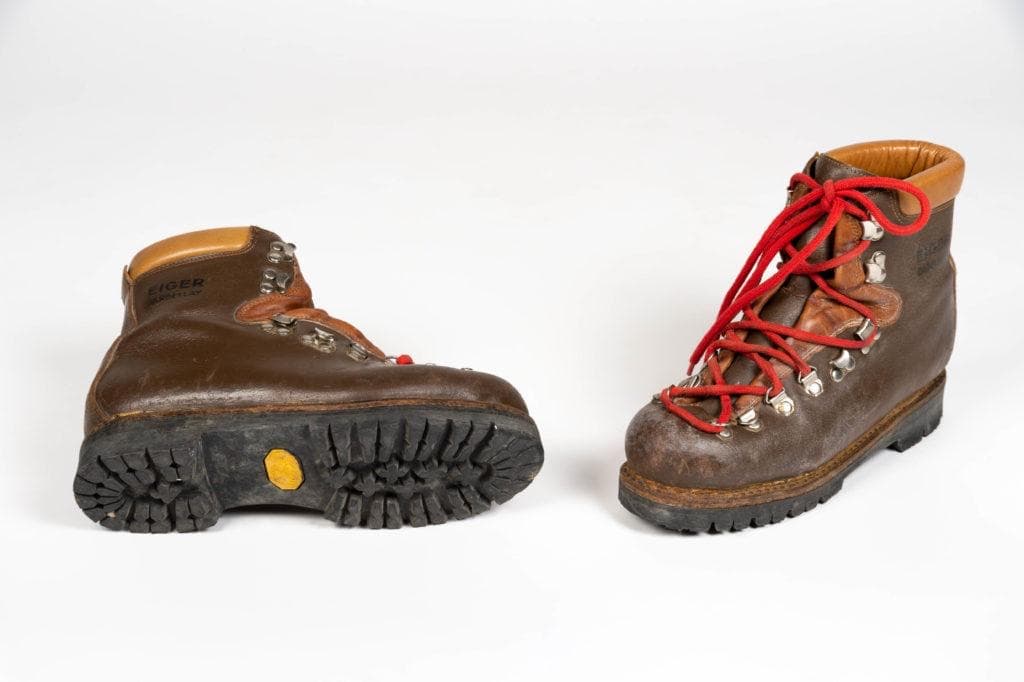
Since 1947 the Vibram name has sat inside an octagon. The shape is a tribute to Milan: it reproduces the octagonal vault of the Galleria Vittorio Emanuele II, in the heart of the city where the company was born.
The golden yellow everyone recognises did not arrive until 1969. Twenty-two years of octagon before it got its colour.
1954: Vibram reaches the summit of K2
On 31 July 1954, an Italian expedition summited K2, the second highest mountain on the planet and one of the hardest.
The climbers went up in boots fitted with Vibram soles: six different types, depending on the section and the conditions.
That summit turned Vibram from an Italian invention into a world reference.
From the mountains to the world
In 1957 the Albizzate factory opened in the province of Varese, still one of the company's key sites. In 1964 Vibram crossed the Atlantic with a deal with Quabaug Rubber Company to manufacture and distribute in North America.
1967 brought Vibram Security for work footwear, built on a slip-resistant nitrile rubber compound. And in 1988, Vibram Grip, made for climbing.
By then the house philosophy was settled: there is no perfect sole for everything. Each activity needs its own compound and its own tread.
FiveFingers: walking almost barefoot
In 2004 the Vibram FiveFingers appeared, with a slot for each toe and the idea of getting close to barefoot feel while protecting the sole of the foot. *Time* magazine listed them among the best inventions of 2007.
There is a nice symmetry to it: decades earlier, Bramani himself had taken an interest in how mountaineers moved barefoot across certain rock.
Megagrip and today's Vibram
The best known name in the catalogue today is Megagrip, a compound built to balance grip, durability and behaviour on wet surfaces. It is the one we fit most often for trekking and trail.
Alongside it sit Arctic Grip for ice, Litebase for saving weight and a long list of terrain-specific compounds. From those 1937 rubber lugs to formulations designed for one particular kind of ground.
If you want to know which one your boot needs, we explain it here: how to choose a Vibram sole for your mountain boot.
Vibram does not make boots
A widespread misunderstanding: Vibram is not a boot brand. It is a sole technology specialist that sells to other manufacturers. That is why you find the octagon on Scarpa, La Sportiva, Salomon, Alpinestars or Hoka.
It works across mountaineering, climbing, trail, trekking, safety footwear, motorcycling, fashion, city shoes and orthopaedics. According to the company, it is present in around 120 countries, produces over 40 million soles a year and racks up more than a million kilometres of testing.
The timeline
| Year | Milestone |
|---|---|
| 1935 | The Punta Rasica tragedy. Six of Bramani's companions die. |
| 1937 | The Carrarmato is born. First test on the Pizzo Badile. |
| 1938 | Bramani patents the sole. |
| 1947 | The Vibram name is enclosed in the octagon. |
| 1954 | First ascent of K2 using six types of Vibram sole. |
| 1957 | New factory in Albizzate (Varese). |
| 1964 | Quabaug deal: expansion into North America. |
| 1967 | Vibram Security for work footwear. |
| 1969 | The octagon turns yellow. |
| 1988 | Vibram Grip for climbing. |
| 2004 | Vibram FiveFingers. |
| Today | Megagrip, Arctic Grip, Litebase and terrain-specific compounds. |
What this has to do with your boot
Everything. Because the same principle that drove Bramani in 1937 is the one we apply every time we resole: a good boot doesn't get thrown away, it gets the sole it deserves.
A mountain boot with a healthy upper and a worn sole is not a dead boot. It is a boot missing five millimetres of rubber. We have been fitting those for more than forty years, with genuine Vibram and heat sealing.
And if your boot has a worn yellow octagon on the sole, now you know where it came from.